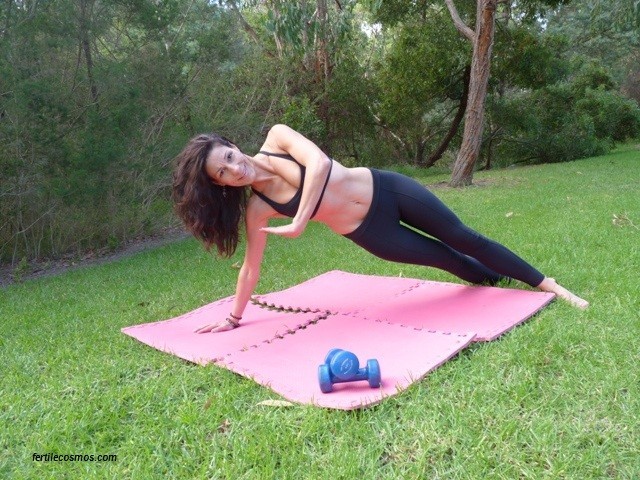
Helen Zee, Fertility Coach
Fertility is a serious business. Firstly and foremost emotionally, physically and lets not discount our health sector, which is nurturing a booming multi million business that is growing by the day. We spend much of our adult life trying not to conceive and when we are ready, we stop contraception, may take a folate supplement and whammo we hope to fall pregnant. There is an alarming number of people who are resigned to dig much deeper within themselves and work through a pre-conception care plan which will support their fertility chances.
I get called on from women and men looking for a pre-conception care plan to support their individual needs. As fertility screening and planning is individualised, so is exercise prescription as many factors are taken into consideration – it’s not a matter of pushing out 3 sets of push ups and squats. Finding the right person or service to help you through this phase in your life is as important as screening the right physician, clinic and supplements. Below is an outline of some simple pros and cons of having a personal trainer that understands fertility.
PROS
1) Knowledge and Design to Tailor – working in the fitness arena for over 10 years and training a plethora of people with varying goals can be found in a number of online search engines. Finding a Personal Trainer that has been a Lifestyle Trainer at a leading IVF clinic like Monash IVF, talked at seminars on the benefits of exercise and limiting symptoms of PCOS and training women weekly to achieve their goals..now that is something that is rare to find. Having a trainer who understands the life cycle of a woman, their menses, and the different cycles involved in IVF/IUF treatment means you have an added support partner in your journey. Understanding and advising that you cannot train at a particular time like egg harvesting, practising de-stress and meditative techniques instead become the elements of training that are holistic and nurturing to you.
Having a trainer that tailors a plan for supportive results and exercises that will prepare your body for a pregnancy is far more important that performing a racked squat with excessive weight, and be able to preacher curl your personal best. It’s about working on the stabilising joint muscles in your hips, your back your shoulders. Correcting muscle imbalances that may present themselves, build on your strength and shed any excessive weight that does not serve you.
A recent article published by Startexercising.com.au has a feature story on Helen and Fertile Cosmos’s services and how knowledge was tailored towards Louise, a client who presented with breast cancer, then pre wedding goals, then a pregnancy program right up to 36 weeks.
2) Your Own Cheer Squad- being empowered to continue to motivate yourself is important at this stage. As a Personal Trainer I say that we are not required if we are motivated from within to maintain a fitness regime and train ourselves to our optimum state on every given day. So other than our main role being one of safe exercise prescription and education, the other key reason clients take us on is to help them stay motivated. Investing in a Personal Trainer does not need to be a life long commitment. There are clients that come in wanting a start up package which teaches them the correct exercises and techniques to serve them and programs which do not require complicated routines and machinery, so it is easily achievable at home. And your Personal Trainer should be happy to cheer you on every step of the way. Its great having a fan out there that thinks you are awesome!
3) Safety – Reduce Risk of Injury- I have been to many allied health professional workshops where Personal Trainers try to create an alliance with health Care Professionals like Sports Physiotherapists, Osteopaths, Myotherapists and the like. One thing most say is – Gym Trainers and Fitness Professionals give us the most business. I beg to differ when the word Fitness “Professional” is used in that context. A Fitness Professional understands body mechanics and dynamics and works with the client to identify and pre disposed conditions and recommends other treatment as part of an overall program. When searching for a Personal Trainer or Fitness Professional, ensure you ask the question on what their response/action plan is to predisposed health risks regarding their training, and if they have worked with Health Care Professionals in the past to nurse a client back to health.
4) Nutritional Advice – In Australia, Personal Trainers and Fitness Professionals are not allowed to claim they are Nutritionists. You need to have a qualification to fully support a client through nutrient prescription. We can however offer nutritional guidance under our qualifications. I have researched extensively an online nutrition program which allows clients to put in their food preferences/allergies goals and the program gives the clients a complete comprehensive 5-6 meal a day calorie counted nutrition plan that matches their output to meet their goals. The program has extensive research by Nutritionists and recipes by chefs so we can give you all the benefits of having a highly tailored nutritional plan created in minutes of adding your profile details. Get in touch if you’d like to get a copy.
5) Accountability – commitment to yourself via your trainers time. 50% of the effort is achieved by turning up to a class. The rest you leave up to your trainer to guide you through and trust in what you do is helping you achieve your goals. A well sort after trainer will encourage rest periods, down time and work with your medical professional circle to keep you on track. You have a support parter in the background working with you.
CONS:
Normally no one wants to write a down side to their service industry, but to be fair and authentic, the following points do have merit and should be considered in your decision-making process. Its part of risk management when you undertake anything new that involves an investment
1) Over Reliance – only exercising with a Personal Training. Putting all your emphasis on one method of training and not learning the techniques to apply outside of the sessions. I balanced approach is to motivate yourself to have a take away program (or ask one of your trainer). Putting your fitness to the test outside of the environment )like on a bike, hike, walk or run can show you your progress
2) Cost – not all trainers strike up a good deal. There is a framework of charging in every country. Have a budget in mind and shop around seeing who offers the best service and value for money. Take note, don’t think that free first class means value for money either. To get full benefits of a Personal Trainer, I recommend not going for a 1 x fortnight package either. Take advantage of deals like “partners train for a discount”, free nutritional advice, affordable nutritional plans, and even extra curricular activities that you can participate in for free.
3) Getting Too Familiar – We are human and love interaction. But sometimes training can be compromised when familiarity becomes a prevalent factor in reoccurring sessions. A good trainer will listen more than they speak. They should be able to sense a new goal and modify your program to give you the challenge you’ve been searching for.
4) Lack of Experience – by asking the right questions of a Personal Trainer service you will be able to decipher if they have worked with clients trying to get pregnant and their ability to adapt workouts to meet changing needs. You could ask them about managing an aliment. They do not need to answer on the spot, but should be able to instruct you that they would find out, speak to your physician if you have one and show you modifications . Ask your trainer if they have experience in training clients with injuries, pain, new to exercise, pregnancy and post natal too.
A good trainer will show they are intuitive, impart knowledge and advice on nutrition too.
Yours in health and wellbeing,
Helen